
By Scott Vanderheyden, General Manager Health and Safety
The leisure industry is often framed as a place of enjoyment, recovery and community wellbeing. Yet behind the pool deck, reception counter, holiday park office or golf course pro shop often sits a very different reality for staff.
Belgravia Leisure’s internal psychosocial incident data tells us that psychosocial hazards and occupational violence and aggression (OVA) are now a persistent feature of our leisure operations, not isolated events. These ongoing events are occurring across aquatic centres, holiday parks and golf courses, with the data revealing a sustained and, at times, increasing exposure to verbal abuse, threats, sexual harassment, bullying and physical aggression, with compounding impacts driven by seasonality, fatigue and operational change.
With external factors impacting financial security through increase cost of living, interest rate hikes due to inflation and other job security concerns, we are expecting to see an increased impact through face-to-face interactions within our venues while those pressures impact the wellbeing of the general population.
The Nature of Psychosocial Hazards in Leisure Settings
Psychosocial hazards in the leisure industry are multifaceted. Data shows that the most common exposures include verbal occupational violence, sexual harassment, bullying, work pressure, fatigue and broader mental health stressors. Unlike many office‑based environments, these hazards occur in highly public, customer‑facing settings where staff are required to enforce rules, manage safety and absorb emotional labour while remaining calm and professional.
Year‑on‑year, Belgravia Leisure incident data indicates that psychosocial incidents increased significantly from 10% of all incidents in 2023/24 to 12% in 2024/25, before reducing slightly in 2025/26, though still remaining materially higher than earlier baselines. This trend suggests not a temporary spike, but an embedded risk profile that ebbs and flows with operational pressure rather than disappearing.
We are seeing that of all our psychosocial incidents, approximately 25% of these directly impact an employee of the venue with 76% of those psychosocial incidents related to occupational violence and aggression through verbal, physical and sexual harassment of employees.
In 2025/26, month on month we have seen an increase compared to previous years, with Belgravia Leisure venues already recording 83% of 2024/25 incidents with three months to capture. This issue is not going away.
Aquatic Centres: High Visibility, High Exposure
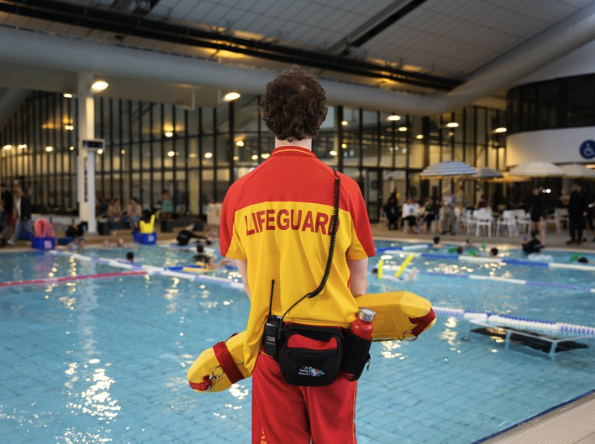
Aquatic centres consistently record the highest volume of psychosocial incidents across the leisure portfolio. Lifeguards, swim teachers, reception and duty managers are frequently exposed to aggression when enforcing rules around supervision, diving, lane use, behaviour management and closing times. Verbal abuse remains the dominant incident type, often escalating quickly when patrons perceive rules as personal affronts rather than safety controls.
Sexual harassment also features prominently, particularly toward younger staff, with inappropriate comments, staring, filming and unwanted advances recorded across multiple venues. The cumulative effect is a workforce that may appear resilient on the surface, yet experiences ongoing erosion of psychological safety.
Holiday Parks: Prolonged Contact and Boundary Tension
Holiday parks present a different psychosocial risk profile. Staff work in environments where guests live on site, sometimes for extended periods, blurring professional boundaries and increasing exposure to prolonged conflict. Data highlights repeated incidents involving intoxication, payment disputes, trespassing, harassment and threats toward staff, often occurring after hours or in low‑staffed conditions.
Unlike aquatic centres where interactions are often brief but intense, holiday park incidents can be sustained, with staff encountering the same individuals repeatedly. This ongoing exposure increases anxiety, hypervigilance and emotional exhaustion, particularly for managers who may live on site or feel personally responsible for guest safety.
Golf Courses: Fewer Incidents, Similar Impacts
Golf courses record fewer psychosocial incidents overall, but the nature of incidents mirrors broader leisure trends. Staff have been assaulted or threatened when denying access, enforcing conditions of play or managing alcohol‑related behaviour. The lower frequency should not obscure the severity; isolated incidents can have disproportionate psychological impact in smaller teams with limited immediate support.
Post‑Peak Season Fatigue: The Hidden Multiplier
One of the most significant, and often underestimated, contributors to psychosocial risk is post‑peak season fatigue. Data shows fatigue incidents remain relatively stable year‑on‑year, yet qualitative incident descriptions reveal fainting, dizziness, anxiety attacks and emotional breakdowns occurring after sustained high‑demand periods such as summer holidays and peak event seasons.
For staff, the transition out of peak season is not a return to baseline. Instead, it is often characterised by:
- Accumulated physical and emotional exhaustion
- Reduced staffing as seasonal workers exit
- Lower tolerance for conflict and stress
This reduced resilience means that incidents which might previously have been managed calmly can escalate more quickly, both for patrons and staff.
Operational Transitions and Seasonal Closures
Changes from summer to winter operations, or the closure of seasonal venues, introduce additional psychosocial strain. Staff may face uncertainty around employment, reduced hours, redeployment or role changes. Data and incident narratives show spikes in conflict during operational transitions, where patron expectations do not align with changed conditions, staffing models or service availability.
For staff, these periods often coincide with personal financial stress and identity loss, particularly for those who strongly identify with seasonal roles. The combination of external aggression and internal uncertainty creates a fertile environment for psychological harm.
What the Year‑on‑Year Data Is Telling Us
Across three reporting years, psychosocial incidents show recurring patterns rather than random distribution. Verbal OVA remains the most prevalent category, followed by sexual harassment and broader mental stress. While reporting maturity may account for some increases, the consistency of themes suggests systemic exposure rather than isolated behavioural issues.
Importantly, employee‑related psychosocial incidents make up a significant proportion of total incidents each year, reinforcing that these are not peripheral concerns but core safety risks within leisure operations. This is resulting in increased workers compensation claims, and increased resources required to manage the post-incident recovery – noting that employees are likely to spend 3-4 times away from the workplace with a psychological injury compared to a physical injury, and these claims cost the business up to four times as much as a physical injury. Prevention and education is much more palatable than reactive measures.
From Data to Dignity: A Way Forward
The data tells a clear story: psychosocial hazards and occupational violence are not seasonal inconveniences; they are structural risks. Addressing them requires more than training modules or signage. It requires leadership acknowledgement that staff wellbeing is inseparable from service delivery.
Belgravia has implemented a range of education and preparation initiatives. This includes de-escalation training, conflict management and resolution opportunities, partnering with Royal Life Saving Society of Australia to convert their Conflict Management e-learning module into the Belgravia LMS with a Belgravia-spin, in addition to a bespoke Psychosocial Hazards Managers Toolkit learning platform in collaboration with Heart and Brain Works to better equip our people leaders to identify psychosocial impact early, intervene and reduce the impact to our people.
Belgravia have also articulated their risk profile through thorough organisational risk assessment, with a venue-specific risk assessment guide rolled out through all venues to help individual managers understand their risk before implementing specific risk-reducing controls.
Some additional key considerations that venues can consider include:
- Proactive psychosocial risk assessments before and after peak seasons
- Fatigue‑aware rostering and recovery planning
- Consistent enforcement of zero‑tolerance behaviours toward staff
- Strong post‑incident debriefs and visible support pathways
- Using year‑on‑year data trends to target high‑risk periods and venues
Ultimately, the leisure industry cannot continue to promote wellbeing to communities while absorbing harm to its own workforce. The challenge – and opportunity – is to translate psychosocial data into practical, human‑centred change that restores dignity, safety and sustainability to leisure work.
- Explore career opportunities.
- Discover the people of Belgravia Leisure.