By Victoria Goodwin-Barlow, Belgravia Group Health and Wellbeing Manager
On 13 March, Australia’s updated 24-hour movement guidelines were released.
At first glance, they reinforce what we already know. Move more, sit less, sleep well.
But this is more than a refinement. It is a reframing.
Health is no longer defined by a single workout, although minutes of moderate or vigorous exercise are still part of the recommendation. It is shaped by how we spend our entire day.
For Australians, this shifts the focus from trying to ‘fit in a workout’ or activity, to building movement naturally into everyday life. Walking more, sitting less, prioritising sleep, and recognising that small, consistent actions matter.
It also strengthens the case for a more place-based approach to health and wellbeing, as well as designing programs that support whole of days behaviours.
Where we live, work and spend our time plays a critical role in shaping our behaviours. The design of our communities, investment in infrastructure and the strength of local networks all influence how likely we are to move regularly, including enabling active travel through connected, accessible movement networks and shared community spaces.
This is an important shift.
It is encouraging us to think more about how we move each day and the types of activities that contribute to good physical health. It moves away from ‘all or nothing’ thinking and towards something more realistic and sustainable, supported by the places and communities around us.
But it also raises the bar.
If health is shaped across 24 hours, then short-term participation is no longer enough.
It is also no longer enough for health clubs to measure attendance and visits or fill sessions. The real question is whether we are helping people to move consistently, reduce sedentary time and improve their overall wellbeing.
For us as leisure operators, this brings greater clarity and new opportunity.
Our role is not simply to provide places to exercise, but to create environments that make movement easier, more social and part of everyday life. Environments that support frequency, routine and connection.
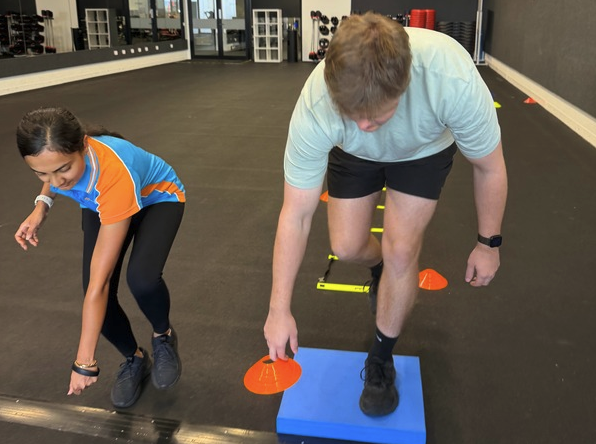
This shift already being put into action is Belgravia Leisure managed venues Michael Clarke Recreation Centre and Stromlo Leisure Centre to mention a few. The venues offers falls prevention sessions delivered by a registered Exercise Physiologist and Physiotherapist, with a focus on balance, coordination, walking gait and hip mobility, helping to reduce the risk of falls and build confidence when moving through everyday activities.
This shift will also no doubt see a rise of venues allowing for the provision of non-venue based activations focused on engaging inactive populations and delivering activity in local settings.
Community outreach activators for venues to consider:
- Social Prescribing Link Workers
Working with GPs and primary care to refer individuals into appropriate activity and wellbeing programmes - Doorstep delivery programmes
Sessions delivered directly in community halls and local neighbourhood parks/settings - Targeted inactivity programmes
Locally designed interventions based on population data, focused on specific groups such as older adults CYP or underserved communities - Community connectors and ambassadors
Training local residents or volunteers to lead walking groups and informal movement sessions - Workplace wellbeing programmes
Delivering movement, education and activity sessions within local workplaces to support whole of day behaviours
- Health condition specific pathways
Structured programmes for conditions such as arthritis, diabetes or cardiac rehabilitation delivered in community settings (where they meet) - Mobile and pop up wellbeing services
Temporary activations in high streets, shopping centres and events to reach non users - At home and digital programmes
On demand and guided programmes to support people who cannot or do not want access venues - Community based falls prevention
Extending falls prevention programmes into libraries, retirement villages and community centres
The guidelines also recognises that exercise which works our cardio-vascular system needs to be supported by regular strength training, functional training that aids balance and coordination, and everyday light intensity movement.
And so this helps us reframe the measures of success: not just how many people we engage, but what changes as a result. Physical health, mental wellbeing and social connection.
If we take these guidelines seriously, success will not be measured by how many people we reach, but by how many Australians we support to move more, more often, and experience meaningful improvements in their overall wellbeing.
The 24-hour movement guidelines offer a clear pathway for our sector and an opportunity to further strengthen the role we play in supporting healthier communities.
Learn more about the 24-hour movement guidelines for all Australians here.
- Explore Belgravia Leisure’s career opportunities.
- Learn more about Belgravia Leisure’s people.

